



Introduction
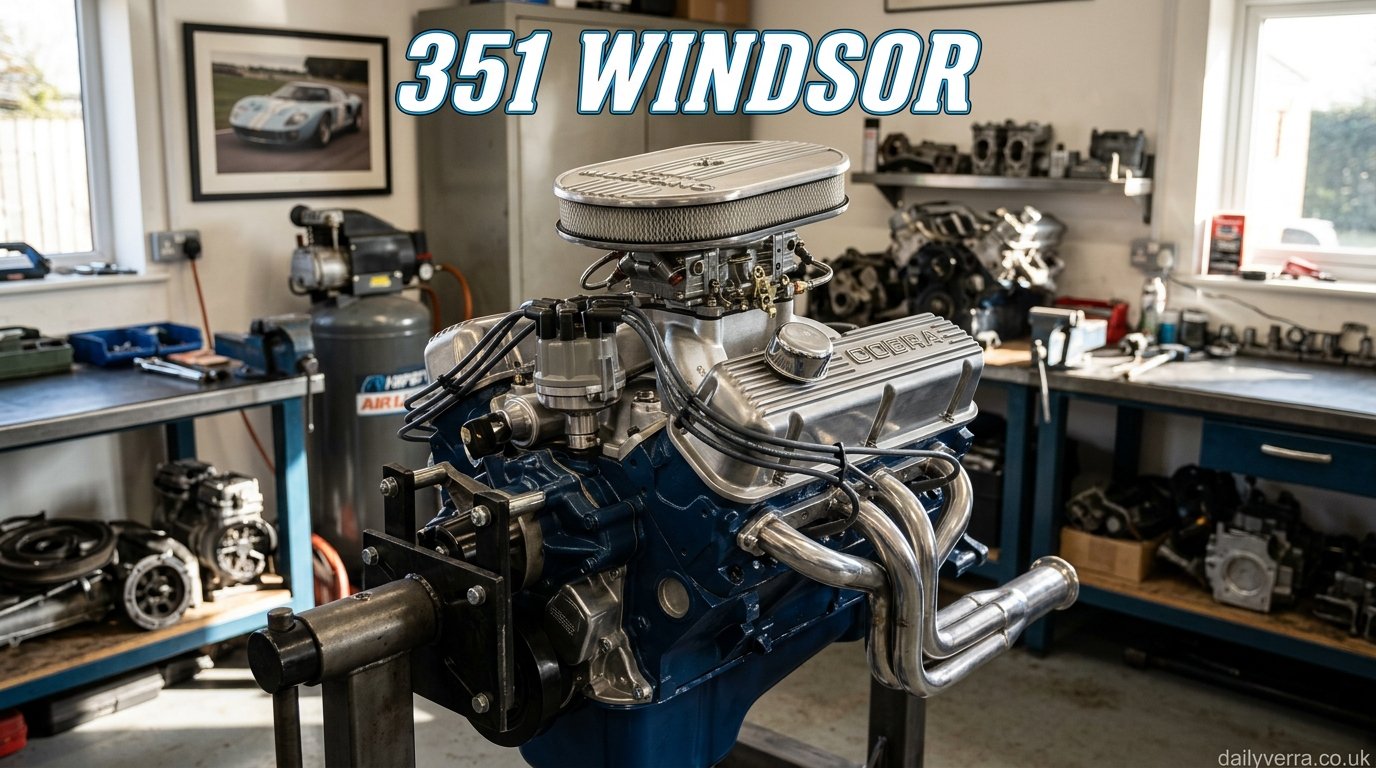
The 351 Windsor is one of the most iconic V8 engines ever produced by Ford. Introduced during the golden era of American performance cars, this engine quickly gained a reputation for delivering exceptional reliability, impressive torque, and remarkable versatility. Known simply as the “351W” among enthusiasts, the engine has powered everything from classic muscle cars and pickup trucks to off-road vehicles and custom hot rods. Even decades after production began, the 351 Windsor remains one of the most respected and widely used Ford small-block engines.
Part of the Windsor engine family, the 351 Windsor was designed to bridge the gap between Ford’s smaller small-block V8 engines and its larger big-block offerings. By combining a compact design with increased displacement, Ford created an engine that could provide excellent performance without the added weight and complexity of larger powerplants. This balance helped the engine earn a loyal following among racers, restorers, mechanics, and automotive enthusiasts.
Today, the 351 Windsor continues to be a popular choice for engine swaps, restorations, and performance builds. Thanks to its strong aftermarket support, abundant replacement parts, and proven durability, it remains relevant in modern automotive culture. Understanding the history, specifications, strengths, and performance potential of the 351 Windsor helps explain why it has maintained its legendary status for more than five decades.
The Origins and History of the 351 Windsor
Ford introduced the 351 Windsor in 1969 as an evolution of the successful 289 and 302 Windsor engines. Engineers increased the deck height of the 302 block, allowing for a longer stroke and larger displacement. This modification resulted in a 351 cubic-inch engine that offered significantly improved torque and overall performance while maintaining the compact dimensions that made Windsor engines so popular.
The engine received its name from Ford’s Windsor Engine Plant in Windsor, Ontario, Canada. Unlike some other Ford engines that were named after vehicle applications or engineering programs, the Windsor designation directly reflected its manufacturing origins. The engine immediately found success in Ford’s performance lineup and quickly became a favorite among drivers seeking more power without moving to a larger big-block platform.
Throughout the 1970s, 1980s, and 1990s, the 351 Windsor continued to evolve. While emissions regulations and fuel economy standards influenced factory power ratings, the engine remained an important part of Ford’s lineup. It powered numerous passenger cars, trucks, vans, and sport utility vehicles, earning a reputation for durability and versatility that continues to this day.
Understanding the 351 Windsor Engine Design
The 351 Windsor is a traditional overhead-valve V8 engine featuring a cast-iron block and cast-iron cylinder heads in most factory configurations. Its design follows the proven pushrod architecture that characterized many American V8 engines of the era. This straightforward design contributed significantly to its reliability and ease of maintenance.
One of the most important differences between the 351 Windsor and smaller Windsor engines is its taller deck height. The increased deck height allowed Ford engineers to accommodate a longer crankshaft stroke, which increased displacement and improved torque production. This seemingly simple design change gave the engine a stronger foundation for both factory performance and future aftermarket modifications.
The engine utilizes a 4.00-inch bore and a 3.50-inch stroke, creating a balanced combination of horsepower potential and low-end torque. The architecture also provides excellent airflow characteristics and allows builders to install larger rotating assemblies when pursuing higher displacement configurations. These engineering decisions helped establish the 351 Windsor as one of Ford’s most versatile V8 platforms.
Technical Specifications and Factory Performance
The 351 Windsor displaces 351 cubic inches, which equals approximately 5.8 liters. Depending on the model year and application, compression ratios varied significantly, affecting power output and fuel requirements. Early high-performance versions typically produced stronger horsepower figures, while later truck-oriented models emphasized torque and durability.
Factory horsepower ratings generally ranged from approximately 250 to nearly 300 horsepower during the engine’s early years. Torque output was often one of the engine’s greatest strengths, frequently exceeding 350 lb-ft in many configurations. These numbers made the engine well-suited for both performance cars and work-oriented vehicles.
As emissions regulations became stricter during the 1970s and 1980s, advertised horsepower ratings declined. However, much of this reduction resulted from changing measurement standards, lower compression ratios, and emissions equipment rather than fundamental weaknesses in the engine design. Even in lower-rated configurations, the 351 Windsor continued to deliver dependable performance and strong pulling power.
Vehicles Equipped with the 351 Windsor
The 351 Windsor powered a wide variety of Ford vehicles throughout its production life. One of its most famous applications was the Ford Mustang, where it helped establish a reputation for strong street performance and muscle car credibility. During the late 1960s and early 1970s, Mustang buyers seeking additional power often chose the 351 Windsor as a desirable upgrade.
Ford’s truck division also relied heavily on the engine. Numerous F-Series pickup trucks utilized the 351 Windsor because of its ability to generate substantial low-end torque. This characteristic made it highly effective for towing, hauling, and demanding work applications. Truck owners appreciated the engine’s reliability and long service life under heavy loads.
In addition to cars and trucks, the engine appeared in Broncos, Econoline vans, full-size sedans, and various commercial vehicles. This widespread use contributed to the availability of parts and replacement engines, which remains a significant advantage for modern restorers and builders seeking affordable components.
Why the 351 Windsor Became So Popular
The popularity of the 351 Windsor can be attributed to several factors. First and foremost is its exceptional durability. Many examples have accumulated hundreds of thousands of miles with routine maintenance, demonstrating the engine’s robust design and long-term reliability. This reputation has made it a trusted choice among enthusiasts and professionals alike.
Another major factor is the engine’s simplicity. Unlike many modern engines that rely on complex electronics and intricate mechanical systems, the 351 Windsor features a straightforward design that is relatively easy to understand, maintain, and repair. This simplicity appeals to hobbyists who enjoy working on their own vehicles.
The engine also benefits from one of the strongest aftermarket ecosystems in the automotive industry. Manufacturers continue to produce cylinder heads, intake manifolds, camshafts, fuel systems, rotating assemblies, and countless other components. This ongoing support allows owners to build anything from a stock restoration engine to a high-horsepower racing combination.
Performance Potential and Aftermarket Support
One of the greatest strengths of the 351 Windsor is its enormous performance potential. Even relatively mild upgrades can result in substantial improvements in horsepower and torque. Modern performance parts have transformed the engine into a platform capable of competing with far newer engine designs.
Aluminum cylinder heads represent one of the most popular upgrades. These heads typically offer improved airflow, reduced weight, and better combustion efficiency compared to original factory castings. Combined with an upgraded camshaft and intake system, they can dramatically increase engine output while maintaining street-friendly characteristics.
Serious performance builders often choose stroker combinations that increase displacement well beyond the factory 351 cubic inches. Engines measuring 393, 408, and even 427 cubic inches have become common within the Windsor community. These larger combinations can produce impressive horsepower and torque figures while retaining the fundamental reliability that made the engine famous.
Common Issues and Reliability Considerations
Although the 351 Windsor is widely regarded as a reliable engine, no mechanical design is completely free from potential issues. Age-related wear can affect engines that have been in service for decades. Components such as timing chains, seals, gaskets, and valve train parts may require replacement as mileage accumulates.
Cooling system maintenance is particularly important. Like many older V8 engines, neglected cooling systems can contribute to overheating problems that may affect long-term durability. Regular inspections and proper maintenance help prevent these issues and extend engine life.
Oil leaks are another common concern, especially in older engines. Valve cover gaskets, oil pan gaskets, and rear main seals may eventually develop leaks due to age and wear. Fortunately, replacement parts are readily available, and most repairs are straightforward compared to more modern engine platforms.
351 Windsor vs Modern Engine Technology
Despite its age, the 351 Windsor continues to compare favorably with many modern engine platforms in certain areas. Its mechanical simplicity allows for easier maintenance and modification, making it attractive to enthusiasts who prefer hands-on vehicle ownership. The engine’s design also provides a unique driving experience characterized by strong low-end torque and classic V8 sound.
Modern engines benefit from advanced fuel injection systems, computer-controlled ignition, variable valve timing, and lightweight materials. These technologies improve efficiency, emissions performance, and overall refinement. However, many enthusiasts still appreciate the raw mechanical character and tuning flexibility of the 351 Windsor.
Advancements in aftermarket technology have helped bridge the gap between old and new. Modern electronic fuel injection systems, ignition controls, and performance components allow builders to combine classic Windsor architecture with contemporary reliability and drivability. This fusion of old-school design and modern technology has contributed to the engine’s continued popularity.
The Role of the 351 Windsor in Restoration and Engine Swaps
The 351 Windsor remains one of the most popular engines for restoration projects. Owners of classic Ford vehicles often seek original-style Windsor engines to preserve authenticity while benefiting from the engine’s proven performance and reliability. Restored Mustangs, Broncos, and trucks frequently feature carefully rebuilt 351 Windsor powerplants.
Engine swaps represent another area where the Windsor excels. Its compact dimensions and extensive aftermarket support make installation relatively straightforward in a wide range of vehicles. Builders appreciate the availability of mounting solutions, accessory drives, and performance components designed specifically for swap applications.
The engine’s versatility allows it to serve many different purposes. Some builders prioritize fuel-efficient street performance, while others focus on off-road capability, towing capacity, or drag racing performance. Few engine platforms offer such flexibility across so many different automotive disciplines.
Conclusion
The 351 Windsor has earned its place among the greatest V8 engines ever produced by Ford. Introduced in 1969, it combined increased displacement, strong torque production, and dependable reliability in a package that appealed to both performance enthusiasts and everyday drivers. Over the years, it powered countless cars, trucks, vans, and sport utility vehicles while establishing a reputation that continues to influence automotive culture.
Its enduring popularity stems from a unique combination of strengths. The engine is durable, easy to maintain, highly adaptable, and supported by an enormous aftermarket industry. Whether used in a faithful restoration, a weekend cruiser, an off-road vehicle, or a high-performance race car, the 351 Windsor consistently demonstrates why it remains one of Ford’s most beloved engine platforms.
More than fifty years after its debut, the 351 Windsor continues to thrive in garages, workshops, race tracks, and car shows around the world. Its legacy reflects not only Ford’s engineering expertise but also the passion of generations of enthusiasts who have kept this legendary V8 alive. For anyone interested in classic American engines, the 351 Windsor remains a benchmark of durability, performance, and timeless automotive excellence.
