



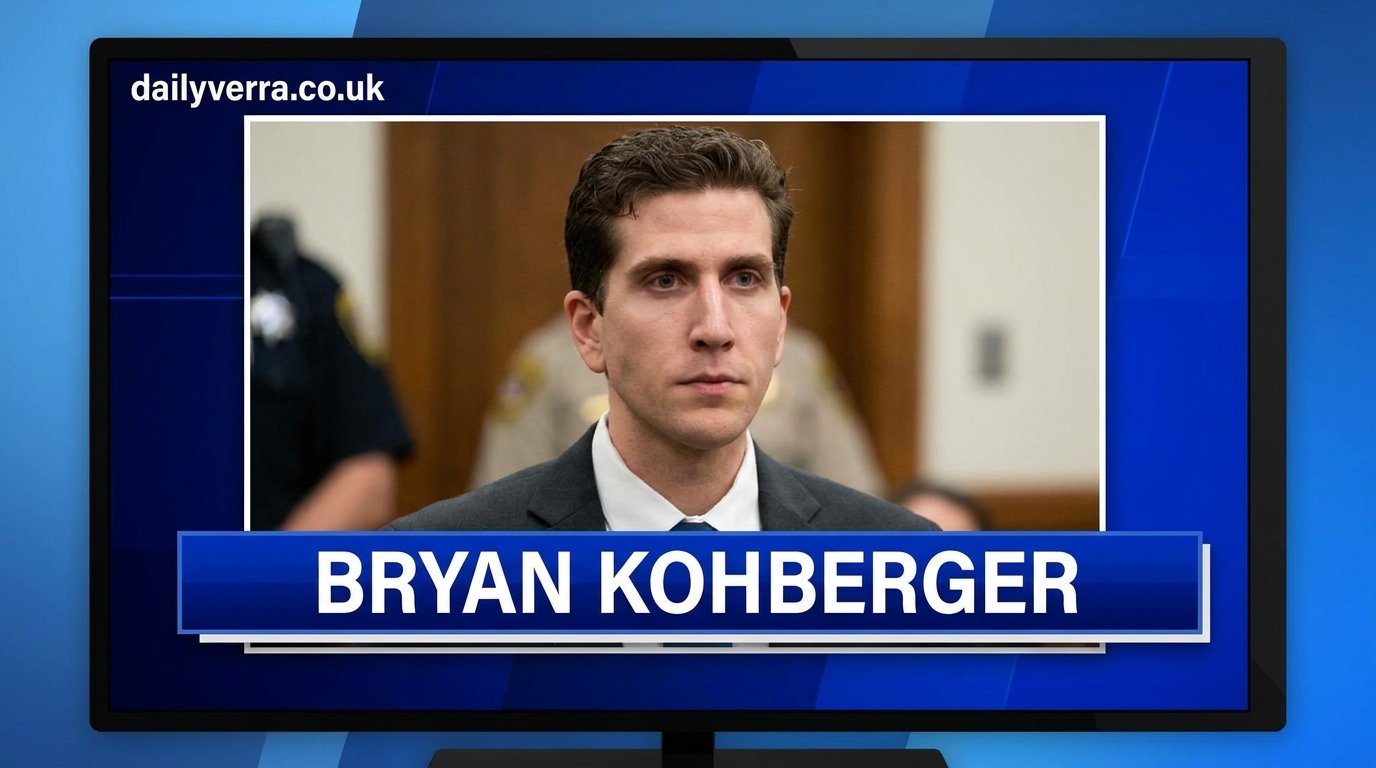
The name Bryan Kohberger became widely known after his arrest in connection with the fatal stabbings of four University of Idaho students in November 2022. The case attracted international attention because of its shocking nature, the lengthy investigation, and the use of modern forensic technology to identify a suspect. News coverage, court filings, and public discussions have continued to shape public understanding of the case as legal proceedings moved forward.
Bryan Kohberger was a graduate student studying criminology when investigators accused him of carrying out the killings. Since his arrest, the case has raised important questions about criminal investigations, DNA evidence, digital forensics, surveillance footage, and the criminal justice system. Understanding the facts of the case requires separating verified court information from speculation that circulated online. This article explains who Bryan Kohberger is, what happened in the Idaho student murders, how investigators built their case, the legal process, and the latest developments based on publicly available information.
Who Is Bryan Kohberger?
Bryan Kohberger was born in Pennsylvania and later pursued higher education in criminal justice and criminology. Before becoming nationally known, he earned a bachelor’s degree and a master’s degree before enrolling in a Ph.D. criminology program at Washington State University. The university is located in Pullman, Washington, only a short drive from Moscow, Idaho, where the crimes occurred.
People who knew Kohberger described him in different ways, reflecting the complexity of his background. Some former classmates recalled that he had a strong interest in criminal behavior and law enforcement, while others remembered him as quiet and academically focused. After his arrest, many aspects of his personal life became the subject of public discussion, although only evidence presented in court carries legal significance.
The University of Idaho Student Murders
On November 13, 2022, four University of Idaho students were found dead inside an off-campus rental home in Moscow, Idaho. The victims were Kaylee Goncalves, Madison Mogen, Xana Kernodle, and Ethan Chapin. The killings shocked the local community and quickly became one of the most closely followed criminal investigations in the United States.
Authorities stated that the victims died from multiple stab wounds during the early morning hours. Two other roommates inside the house survived the attack without physical injuries. The unusual circumstances, the lack of an immediate suspect, and the absence of an obvious motive led to widespread public interest and extensive media coverage. Investigators urged the public to rely on verified information instead of rumors circulating on social media.
How Investigators Identified Bryan Kohberger
The investigation involved local police, the Idaho State Police, and the Federal Bureau of Investigation. Detectives collected thousands of photographs, videos, tips, and forensic samples while reviewing surveillance footage from homes and businesses near the crime scene. Investigators also analyzed vehicle movements in the area to identify potential suspects.
According to court documents, investigators focused on a white Hyundai Elantra seen traveling near the victims’ residence around the time of the killings. Additional evidence included cellphone records that investigators believed placed Bryan Kohberger near the area on several occasions before the incident. A knife sheath recovered at the crime scene reportedly contained DNA evidence that investigators linked to Kohberger through forensic genetic analysis, which became one of the most important pieces of evidence in the case.
Digital Evidence and Forensic Technology
Modern forensic science played a major role in the investigation. Detectives relied on surveillance cameras, cellphone location records, license plate databases, and DNA testing to reconstruct events before and after the killings. These technologies allowed investigators to narrow their search and develop a timeline supported by multiple forms of evidence.
DNA analysis received particular attention because investigators reportedly used investigative genetic genealogy to assist in identifying a possible suspect before obtaining a direct DNA comparison. Digital forensic evidence, including electronic devices and communication records, also became part of the investigation. Prosecutors argued that combining physical evidence with digital records strengthened the overall case, while defense attorneys challenged the interpretation and reliability of some evidence during legal proceedings.
Arrest, Charges, and Court Proceedings
Bryan Kohberger was arrested on December 30, 2022, at his family’s home in Pennsylvania after investigators obtained an arrest warrant. He was later extradited to Idaho to face criminal charges. Prosecutors charged him with four counts of first-degree murder and one count of felony burglary related to entering the victims’ residence.
The legal process included multiple hearings involving evidence disclosure, procedural motions, and discussions about pretrial publicity. Because the case received enormous media attention, the court considered measures to help protect the fairness of future proceedings. Both prosecutors and defense lawyers filed numerous legal motions while preparing their arguments, demonstrating how complex major homicide cases often become before reaching their final resolution.
Evidence Presented by Prosecutors
Prosecutors built their case around several categories of evidence rather than relying on a single piece of information. Court filings described DNA recovered from a knife sheath, surveillance footage showing a vehicle matching Kohberger’s car, cellphone data indicating movements consistent with the investigation, and other forensic findings collected during searches.
Investigators also searched Kohberger’s apartment, vehicle, office, and family residence after his arrest. Evidence gathered from these locations became part of the ongoing legal process. Prosecutors argued that when viewed together, the physical evidence, digital records, and investigative findings created a consistent picture supporting the charges. The defense maintained that every piece of evidence should be carefully examined and challenged through the judicial process.
Public Attention and Media Coverage
The Bryan Kohberger case became one of the most discussed criminal investigations in recent years. Television networks, newspapers, podcasts, documentaries, and online creators closely followed each stage of the investigation. Interest remained high because of the mystery surrounding the case during its early weeks and the later release of court documents.
The intense media attention also created challenges. False rumors, misleading claims, and unverified theories spread rapidly across social media platforms. Law enforcement officials repeatedly encouraged the public to rely on official court filings and verified statements instead of speculation. The case highlighted the growing influence of digital media on high-profile criminal investigations and the importance of distinguishing facts from online rumors.
The Guilty Plea and Sentencing
In 2025, Bryan Kohberger entered a guilty plea to the murders of the four University of Idaho students and the related burglary charge as part of a plea agreement. By pleading guilty, he admitted responsibility for the crimes, eliminating the need for a lengthy jury trial. The agreement meant prosecutors no longer sought the death penalty.
The court later sentenced Kohberger to four consecutive life sentences without the possibility of parole for the murder convictions, along with an additional sentence for burglary. During the sentencing hearing, family members of the victims spoke about the lasting impact of the crimes, while the court formally imposed the sentence. The guilty plea concluded the criminal case without a trial, although many questions about motive remain unanswered because Kohberger did not publicly explain why the killings occurred.
Lasting Impact of the Idaho Murders
The murders deeply affected the University of Idaho community, the city of Moscow, and the victims’ families. Memorial events honored the lives of the four students, and the case prompted renewed discussions about campus safety, home security, and emergency response procedures. Universities across the country also reviewed safety measures for students living off campus.
The investigation demonstrated how modern law enforcement combines traditional detective work with advanced forensic science. DNA analysis, digital evidence, surveillance technology, and cooperation among multiple law enforcement agencies played important roles in solving the case. At the same time, the investigation reminded the public that criminal cases should be judged through verified evidence presented in court rather than public speculation.
Conclusion
Bryan Kohberger’s case remains one of the most significant criminal cases in recent American history because of the tragic loss of four University of Idaho students, the extensive forensic investigation, and the nationwide public attention it received. From the initial search for a suspect to the collection of DNA evidence, digital records, surveillance footage, and the eventual guilty plea, the case demonstrated both the capabilities and the complexity of modern criminal investigations.
Although the legal proceedings have concluded with Bryan Kohberger receiving four consecutive life sentences without parole, the impact of the murders continues to be felt by the victims’ families, friends, and the University of Idaho community. The case serves as a reminder of the importance of careful police investigations, reliable forensic evidence, and a justice system that relies on verified facts rather than speculation. As the public continues to reflect on this tragic event, the memories of Kaylee Goncalves, Madison Mogen, Xana Kernodle, and Ethan Chapin remain at the center of the story.
