



Introduction
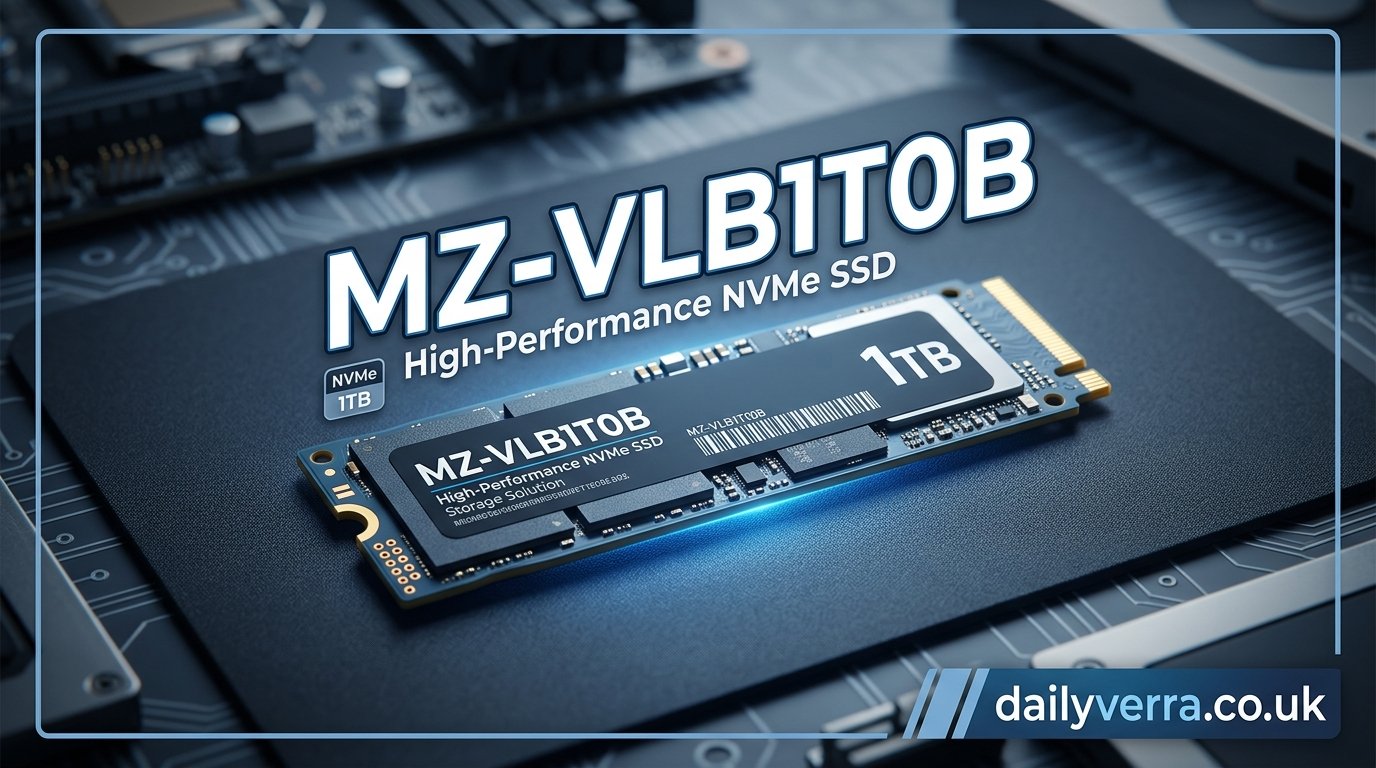
The MZ-VLB1T0B is a Samsung OEM solid-state drive that has become widely recognized among PC enthusiasts, IT professionals, laptop upgrade users, and system builders. Although it is not a retail SSD commonly displayed on store shelves, the drive has earned a strong reputation due to its impressive performance, dependable reliability, and advanced Samsung storage technology. The model number MZ-VLB1T0B refers to the Samsung PM981a 1TB NVMe SSD, a storage solution frequently installed in premium laptops, workstations, and desktop computers from major manufacturers.
As modern software becomes increasingly demanding, storage performance plays a crucial role in overall system responsiveness. Operating systems, games, creative applications, virtual machines, and large data files all benefit from faster storage technology. The Samsung PM981a was designed to meet these demands by combining PCIe 3.0 connectivity, NVMe architecture, Samsung V-NAND flash memory, and an advanced controller capable of delivering excellent real-world performance.
Even years after its release, the MZ-VLB1T0B remains highly sought after because it provides premium-level performance without requiring users to invest in the newest and most expensive SSD generations. Understanding its architecture, capabilities, performance metrics, reliability characteristics, and practical applications helps explain why this drive continues to maintain relevance in today’s storage market.
Understanding the Samsung MZ-VLB1T0B SSD
The Samsung MZ-VLB1T0B belongs to Samsung’s PM981a product family, a lineup developed primarily for original equipment manufacturers. OEM drives differ from retail SSDs because they are supplied directly to computer manufacturers rather than sold individually in consumer packaging. Despite this distinction, the hardware inside many OEM Samsung SSDs often matches or closely resembles technology found in highly regarded consumer products.
The drive utilizes the M.2 2280 form factor, which has become the industry standard for modern internal SSDs. Measuring 22 millimeters wide and 80 millimeters long, the SSD can fit inside most modern laptops, desktop motherboards, mini PCs, and workstation systems equipped with M.2 NVMe slots. The compact design allows manufacturers to maximize performance while preserving valuable internal space.
At its core, the PM981a is built around Samsung’s advanced NAND flash memory technology and NVMe storage architecture. The combination allows the SSD to communicate more efficiently with the processor than traditional SATA drives. As a result, users experience significantly reduced latency, faster file transfers, quicker application launches, and a noticeably more responsive computing experience.
Technical Specifications and Core Architecture
The MZ-VLB1T0B provides 1TB of storage capacity, making it suitable for a broad range of computing tasks. A terabyte of storage allows users to install modern operating systems, professional software suites, large gaming libraries, multimedia collections, and extensive project files without constantly worrying about available space.
One of the most important aspects of the drive is its PCIe 3.0 x4 interface. By utilizing four PCI Express lanes, the SSD gains access to substantially more bandwidth than traditional SATA SSDs. While SATA storage is generally limited to approximately 550 MB/s, the PM981a can achieve several times that throughput, dramatically improving storage-intensive operations.
The drive also supports the NVMe protocol, which was specifically designed for solid-state storage. Unlike older communication standards developed during the hard drive era, NVMe reduces overhead and improves efficiency. This enables faster command processing, lower latency, and better utilization of modern multi-core processors, all of which contribute to improved system performance.
Samsung V-NAND Technology and Flash Memory Design
A major reason for Samsung’s success in the storage industry is its leadership in NAND flash development. The MZ-VLB1T0B incorporates Samsung V-NAND technology, which represents a significant advancement over traditional planar NAND memory designs. Instead of arranging memory cells only across a flat surface, V-NAND stacks cells vertically in multiple layers.
This vertical structure allows Samsung to increase storage density while simultaneously improving endurance and efficiency. The design reduces electrical interference between cells and enables more reliable long-term operation. As a result, users benefit from improved durability, better power efficiency, and more consistent performance over the lifespan of the drive.
Samsung’s expertise in manufacturing both NAND memory and SSD controllers provides another important advantage. Because the company controls key components of the storage ecosystem, it can optimize hardware and firmware together. This integration helps ensure stable operation, efficient data management, and dependable performance under a wide variety of workloads.
Performance Characteristics and Speed Analysis
Performance remains one of the strongest selling points of the MZ-VLB1T0B. Sequential read speeds can reach approximately 3,200 MB/s, while sequential write speeds may approach 2,400 MB/s under ideal conditions. These figures place the PM981a among the fastest PCIe Gen 3 SSDs available and allow it to outperform traditional SATA drives by a substantial margin.
Random read and write performance is equally important because everyday computing tasks rely heavily on small data transactions. When opening applications, loading operating systems, accessing databases, or switching between programs, random performance determines how responsive a system feels. The PM981a delivers excellent random input/output operations, helping applications launch quickly and maintaining smooth multitasking performance.
Large file transfers also benefit significantly from the drive’s architecture. Video editors, photographers, engineers, and developers frequently work with substantial amounts of data. The SSD’s ability to move files rapidly reduces waiting times and improves productivity, particularly during demanding workflows involving large media assets or project archives.
Controller Technology and Intelligent Data Management
Every SSD relies on a controller to coordinate storage operations, and the MZ-VLB1T0B incorporates a sophisticated Samsung controller designed to maximize performance and reliability. The controller functions as the central processing unit of the SSD, managing data placement, caching, wear leveling, garbage collection, and error correction.
Advanced wear-leveling algorithms ensure that write operations are distributed evenly across memory cells. This process prevents specific sections of the NAND flash from experiencing excessive wear and helps extend the overall lifespan of the drive. Such management is particularly important for users who regularly perform large file transfers or intensive storage operations.
The controller also employs intelligent caching techniques to improve responsiveness during demanding workloads. Frequently accessed data can be processed more efficiently, helping maintain consistent performance levels even when the drive is handling multiple simultaneous tasks. Combined with Samsung’s firmware optimizations, these features contribute to the SSD’s reputation for reliability and sustained performance.
Thermal Efficiency and Power Consumption
As SSD performance increases, thermal management becomes increasingly important. High-speed NVMe drives generate more heat than older storage devices due to their greater processing capabilities and higher data transfer rates. Excessive temperatures can lead to thermal throttling, a protective mechanism that reduces performance to prevent overheating.
The MZ-VLB1T0B incorporates various thermal management features designed to maintain stable operating conditions. Samsung’s controller firmware continuously monitors temperatures and adjusts performance when necessary to protect internal components. These measures help preserve both reliability and long-term durability.
Power efficiency is another area where the PM981a performs well. Modern laptops rely heavily on efficient hardware to maximize battery life, and Samsung’s V-NAND technology contributes to reduced power consumption during both active and idle states. This balance between performance and efficiency makes the drive particularly attractive for mobile computing environments.
Real-World Performance in Gaming and Content Creation
Gaming represents one of the most common use cases for high-performance NVMe SSDs. Modern games often exceed 100GB in size and rely heavily on rapid storage access to load textures, environments, and assets efficiently. The MZ-VLB1T0B helps reduce loading screens, improve level transitions, and create a smoother overall gaming experience.
While storage speed does not directly increase frame rates, it can significantly improve responsiveness in open-world games and titles that stream large amounts of content during gameplay. Faster storage also reduces installation times, update durations, and game launch delays, contributing to a more enjoyable user experience.
Content creators benefit from the drive in different ways. Video editors working with high-resolution footage, graphic designers handling large projects, photographers managing extensive image libraries, and software developers compiling complex codebases all require fast storage. The PM981a’s combination of high throughput and low latency helps accelerate these workflows while reducing productivity bottlenecks.
Reliability, Endurance, and Long-Term Durability
Reliability is often more important than raw benchmark performance, particularly for users storing valuable personal or professional data. Samsung has established a strong reputation in this area through years of experience in memory and storage manufacturing. The MZ-VLB1T0B reflects that heritage through robust engineering and extensive quality control processes.
The drive incorporates sophisticated error correction technologies that continuously monitor data integrity. These systems detect and correct potential issues before they impact stored information. Combined with advanced bad-block management and wear-leveling algorithms, these features help maintain stable operation throughout the drive’s lifespan.
Long-term endurance is another notable strength. The PM981a was designed for deployment in premium systems where reliability is essential. Under typical consumer workloads, users can expect many years of dependable operation. This durability has contributed significantly to the drive’s popularity among enthusiasts and professionals who prioritize consistent performance over time.
Compatibility, Upgrade Potential, and Installation Considerations
One reason the MZ-VLB1T0B remains popular is its excellent compatibility with modern hardware. Most desktop motherboards released during the NVMe era support PCIe Gen 3 SSDs, making installation relatively straightforward. Users upgrading from SATA SSDs or traditional hard drives often experience dramatic improvements in system responsiveness after installing the PM981a.
Laptop upgrades are equally common. Many notebooks originally shipped with smaller-capacity SSDs, and replacing those drives with a 1TB PM981a provides both increased storage space and enhanced performance. The standard M.2 2280 form factor ensures compatibility with a broad range of devices.
The drive can also be used in external NVMe enclosures, transforming it into a high-speed portable storage solution. This flexibility makes the SSD useful for backups, media transportation, project storage, and professional workflows that require fast external data access. Such versatility adds further value to an already capable storage device.
Market Position and Continued Relevance
Although PCIe Gen 4 and PCIe Gen 5 SSDs now dominate technology headlines, the MZ-VLB1T0B continues to hold a strong position in the storage market. Many real-world computing tasks simply do not require the extreme bandwidth offered by newer generations. For everyday productivity, gaming, creative work, and professional applications, a high-quality PCIe Gen 3 SSD often provides performance that feels nearly identical in practical use.
The PM981a occupies a unique position because it combines premium Samsung engineering with OEM pricing advantages. Users frequently discover that the drive offers performance levels comparable to well-known retail models while remaining more affordable in many situations. This value proposition has helped sustain demand long after the drive’s initial introduction.
Furthermore, millions of systems worldwide continue to rely on PCIe Gen 3 infrastructure. For these users, upgrading to a proven SSD like the MZ-VLB1T0B can deliver exceptional results without requiring a complete platform replacement. Its combination of speed, reliability, efficiency, and compatibility ensures continued relevance for years to come.
Conclusion
The Samsung MZ-VLB1T0B PM981a 1TB NVMe SSD remains one of the most respected OEM storage solutions available. Built around Samsung’s advanced V-NAND technology, PCIe 3.0 x4 connectivity, and NVMe architecture, the drive delivers excellent performance across a wide range of workloads. Fast sequential speeds, strong random performance, efficient thermal management, and dependable reliability make it suitable for gamers, professionals, content creators, and everyday users alike.
Beyond raw performance, the drive’s long-term durability and broad compatibility contribute significantly to its lasting popularity. Whether installed in a desktop PC, laptop, workstation, or external enclosure, the PM981a consistently provides responsive and efficient storage performance that meets modern computing demands.
Even in an era dominated by newer PCIe generations, the MZ-VLB1T0B continues to demonstrate the value of well-engineered storage technology. Its balance of speed, capacity, reliability, and practicality ensures that it remains a compelling choice for users seeking a proven 1TB NVMe SSD capable of delivering excellent real-world results.
