



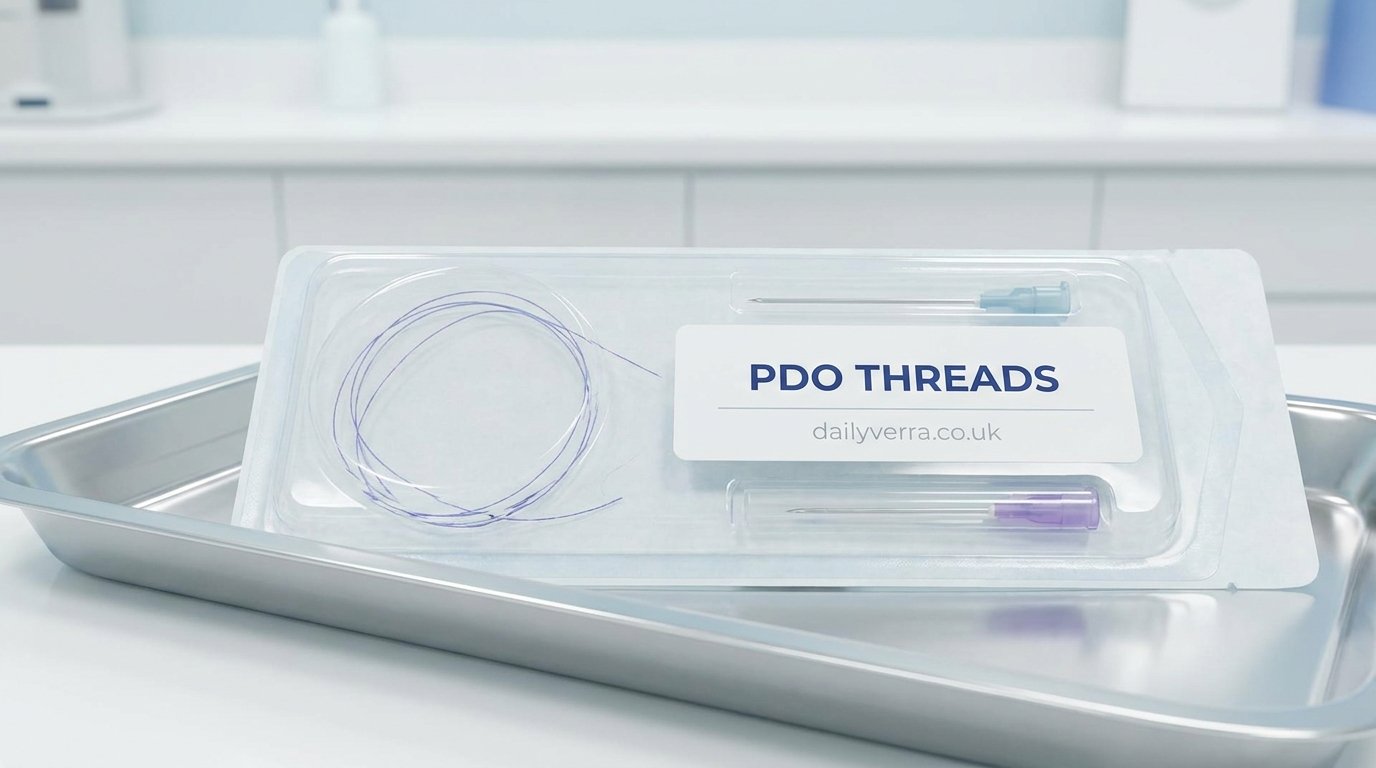
PDO threads have become one of the most popular non-surgical cosmetic treatments for people who want firmer, younger-looking skin without undergoing plastic surgery. The treatment is designed to lift sagging skin while encouraging the body to produce more collagen naturally. Because it is minimally invasive, many people choose a PDO thread lift to improve facial contours, reduce signs of aging, and achieve natural-looking results with little downtime.
Originally developed for medical procedures, polydioxanone (PDO) threads have been used safely for many years. Today, they are widely used in aesthetic medicine to tighten loose skin and improve facial definition. Understanding how PDO threads work, who is a good candidate, what to expect during treatment, and how to care for the skin afterward can help you decide whether this procedure is right for you.
What Are PDO Threads?
PDO threads are thin, dissolvable sutures made from polydioxanone, a material that has been safely used in surgical procedures for decades. During a PDO thread lift, these threads are carefully placed beneath the skin using fine needles or cannulas. Once inserted, they provide immediate support to the skin while also stimulating the body’s natural healing response.
As the threads gradually dissolve over several months, they encourage collagen production around the treated area. Collagen is an important protein that helps maintain skin firmness, elasticity, and structure. The combination of an instant lifting effect and long-term collagen stimulation makes PDO threads a popular option for facial rejuvenation without major surgery.
How PDO Thread Lift Works
The treatment works through two main processes. First, the inserted threads create gentle mechanical support that lifts loose or sagging skin. This immediate improvement can be seen in areas such as the cheeks, jawline, neck, and eyebrows, giving the face a more refreshed appearance.
The second process happens gradually as the body reacts to the threads. New collagen develops around the treatment area, improving skin texture, firmness, and elasticity over time. Even after the threads dissolve naturally, the collagen network remains, helping maintain smoother and tighter skin for several months.
The procedure usually takes less than an hour, depending on the number of treatment areas. Local anesthetic is commonly used to reduce discomfort, allowing most patients to return home shortly after the appointment without the need for hospitalization.
Types of PDO Threads Used in Aesthetic Treatments
Different types of PDO threads are available to address specific cosmetic concerns. Mono threads are smooth and mainly used to stimulate collagen production while improving overall skin quality. They are often selected for fine lines, mild skin laxity, and areas where subtle tightening is desired.
Cog threads contain small barbs that grip the tissue and provide a noticeable lifting effect. These threads are commonly used for lifting the cheeks, defining the jawline, improving facial contours, and reducing mild to moderate skin sagging. Their design allows the skin to be repositioned more effectively than smooth threads.
Screw threads consist of one or more intertwined threads that create additional volume and support beneath the skin. They are frequently chosen for areas that need both firmness and fullness, helping improve facial balance while encouraging natural collagen formation over time.
Common Treatment Areas for PDO Threads
PDO thread lifts are commonly performed on several areas of the face and neck. The cheeks, jawline, chin, neck, eyebrows, and lower face are among the most popular treatment locations. These areas often develop loose skin as collagen production naturally declines with age, making them suitable for thread lifting.
Some practitioners also use PDO threads around the nasolabial folds, marionette lines, and under the chin to create smoother facial contours. Depending on the individual’s skin condition and aesthetic goals, multiple areas may be treated during the same session to achieve balanced and natural-looking results.
Although facial rejuvenation remains the primary use, PDO threads are sometimes applied to other parts of the body, including the neck, upper arms, abdomen, and knees, where mild skin tightening is desired. The suitability of body treatments depends on skin quality and should always be evaluated by a qualified medical professional.
Benefits of PDO Thread Lift
One of the biggest advantages of PDO threads is that they provide facial lifting without the need for traditional surgery. The treatment requires only small entry points, leaves minimal scarring, and generally involves a shorter recovery period compared with surgical facelift procedures. Many people appreciate that the results look natural rather than dramatically changing their appearance.
Collagen stimulation is another important benefit. As new collagen develops, the skin gradually becomes firmer, smoother, and more elastic. This improvement may continue for several months after the treatment, even though the threads themselves slowly dissolve. The ongoing collagen production helps maintain healthier skin quality.
Most patients also value the convenience of the procedure. Treatment sessions are relatively short, local anesthesia is usually sufficient, and many individuals resume normal daily activities within a few days. These factors have contributed to the growing popularity of PDO thread lifts among people seeking minimally invasive facial rejuvenation.
Recovery and Aftercare Following PDO Threads
Recovery after a PDO thread lift is generally straightforward, although mild swelling, bruising, tenderness, and tightness are common during the first few days. These effects usually improve gradually as the treated tissues heal. Following the healthcare provider’s aftercare instructions plays an important role in achieving the best possible outcome.
Patients are often advised to avoid excessive facial movements, vigorous exercise, heavy lifting, and facial massages for a short period after treatment. Sleeping on the back with the head slightly elevated may also help reduce swelling and protect the newly placed threads while they settle into position.
Good skincare habits, adequate hydration, sun protection, and regular follow-up appointments can support healing and maintain long-term results. Because collagen continues developing over time, many people notice ongoing improvements in skin texture and firmness during the months following the procedure.
Possible Risks and Who Is a Good Candidate
Although PDO threads have a strong safety record when performed by trained medical professionals, every cosmetic procedure carries some risks. Temporary bruising, swelling, mild discomfort, and unevenness can occur during the healing process. Less common complications may include infection, thread visibility, asymmetry, or thread migration, particularly if proper technique or aftercare is not followed.
A suitable candidate is typically someone with mild to moderate skin laxity who wants subtle lifting without surgery. Healthy adults who have realistic expectations often achieve the most satisfying results. People with severe skin sagging may require alternative treatments because thread lifting has limitations in cases of advanced aging.
Before treatment, a detailed medical consultation is essential. The provider should evaluate skin quality, review medical history, discuss medications, and explain the expected results, possible risks, and recovery process. Choosing an experienced and properly trained practitioner greatly improves both safety and treatment outcomes.
How Long PDO Thread Results Last
The visible lifting effect usually appears immediately after treatment, while improvements from collagen production continue to develop over the following weeks and months. Most PDO threads gradually dissolve within several months, but the newly formed collagen helps maintain skin support beyond the life of the threads themselves.
For many individuals, results remain noticeable for around one year or longer, although longevity varies depending on age, skin condition, lifestyle, metabolism, and the type of threads used. Factors such as smoking, excessive sun exposure, and poor skincare may reduce the duration of the results.
Many patients choose maintenance treatments to preserve their refreshed appearance. A personalized treatment schedule created by a qualified aesthetic practitioner can help maintain facial definition and skin firmness while supporting long-term collagen production.
Conclusion
PDO threads have become a trusted option for people seeking non-surgical facial rejuvenation with natural-looking results. By combining an immediate lifting effect with long-term collagen stimulation, the treatment can improve skin firmness, facial contours, and overall skin quality while requiring relatively little downtime. Advances in aesthetic medicine have made PDO thread lifts a widely accepted choice for individuals who want noticeable yet subtle improvements.
Although the procedure offers many benefits, the best results depend on proper patient selection, realistic expectations, skilled technique, and careful aftercare. A consultation with a qualified medical professional is essential to determine whether PDO threads are suitable for your needs and aesthetic goals. With appropriate treatment and healthy skincare habits, PDO thread lifts can provide a refreshed appearance and support smoother, firmer skin for months after the procedure.
